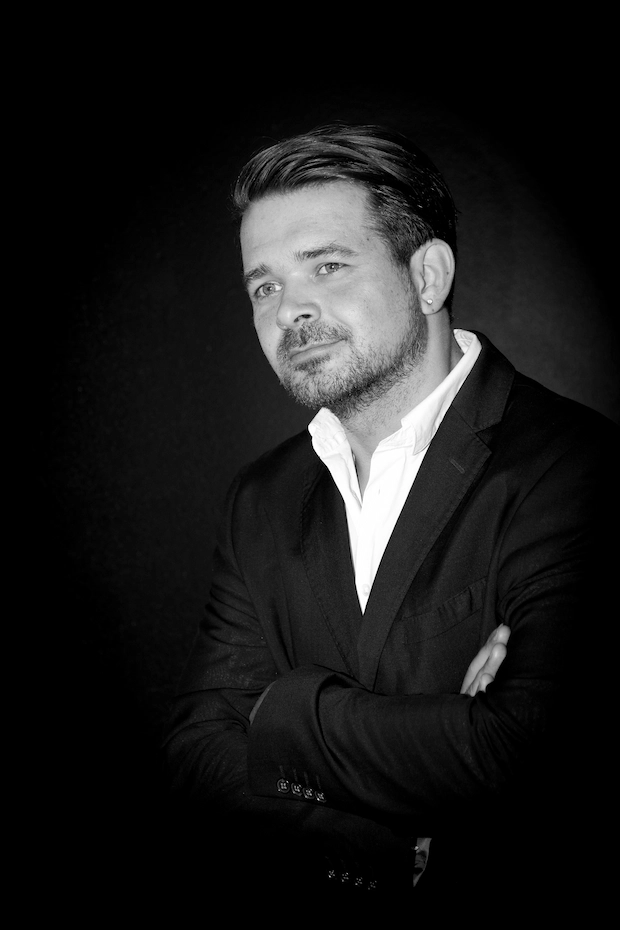
There is a man I know — not personally, but the way you know a type — who wakes up before his family stirs, makes coffee, and reads something older than the news. He is trying, quietly, to be better than he was yesterday. Not for an audience. Not for a podcast. Because something in him insists on it.
Quiet Strength is for him.
What this is
This is a philosophy journal — in the old sense of the word. Philosophy as a practice, not a subject. The Stoics didn’t study their ideas the way we study chemistry; they practised them the way an athlete practises a sport, daily and imperfectly, knowing you never fully arrive.
We publish long-form essays across five pillars — Philosophy, Health, Career, Brotherhood, and History — because a man who thinks clearly but neglects his body is not wise, and a man who succeeds professionally but has no real friendships has made a poor trade. We’re interested in the whole man.
What this isn’t
This isn’t a men’s rights platform, and it isn’t a self-improvement machine selling you a better version of yourself. It has no ideology to sell and no supplements to push.
It also isn’t interested in the version of masculinity built on dominance and unable to tolerate vulnerability — the kind that converts every insecurity into aggression. The antidote to that isn’t less masculinity. It’s better masculinity, the kind Seneca, Epictetus, and Marcus Aurelius actually wrote about: hardness turned inward, against your own worst impulses, not outward against the world.
How it’s organized
Essays are published several times a week. Reading series walk through primary sources — the actual Meditations, the actual letters to Lucilius — properly decoded, not summarized into a listicle. And every Monday, a short, unfiltered piece of prose runs without the usual decorum, because philosophy that can’t survive contact with real life is only decoration.
The weekly newsletter carries one principle, one essay, and nothing you didn’t ask for.
Ita fac, mi Lucili: vindica te tibi.
Seneca, on claiming yourself for yourself
That’s where we begin, every time.
Who writes this
I was born in Mariupol.
If you know that name now, it is because of the war. When I was born there, it was just a city on the Sea of Azov where my mother worked two jobs and my grandmother made soup and my father was present in the way that some men are present — occupying space without filling it. He left when I was seven. My mother didn’t.
She brought us to Slovenia. She worked more jobs. She did not complain in a way I can remember. I watched her do something I did not yet have a word for: she chose, every morning, to carry what she had been given without letting it make her smaller.
I did not understand at the time that this was philosophy. I understand it now.
I spent thirteen years building something in the financial industry — a company I helped take from a garage to a name that everyone in the region knew. I wrote columns simultaneously for every major newspaper, something no single author had done before. I was cited in more than fifty academic dissertations. I spoke at conferences. I was, by most external measures, successful.
Then I discovered that the man I had built it with had been deceiving me throughout. I walked away from everything I had built. I started again from zero.
I was building again — organising one of the largest financial conferences in the region — when COVID arrived. The second time I lost everything.
I rebuilt again.
Then the war came to Mariupol. To the streets I grew up on. To the buildings where my family still lived. I organised a campaign that mobilised thousands of people and reached the BBC, and eventually the Vatican — because the world was not yet paying attention to Mariupol, and I needed it to. One grandmother was evacuated. The other did not make it. Two apartments are gone.
I had a breakdown. I recovered.
Then a stroke. I recovered from that too, though more slowly, and with the specific humility that comes from your own body teaching you the limits you had been ignoring.
I tell you this not because suffering is a credential, and not because resilience is something to perform. I tell you because this journal is called Quiet Strength, and I want you to understand precisely what I mean by that phrase.
Quiet strength is not the absence of difficulty. It is what remains when the difficulty has done its worst and you are still here, still choosing, still interested in becoming something better than what the circumstances suggested was possible.
The Stoics wrote about this. Not as theory — Marcus Aurelius wrote his philosophy in military tents at war, at fifty, with most of his children already dead. Epictetus wrote his from slavery. Seneca wrote his under Nero.
They were not writing about managing stress. They were writing about how to remain a person — fully, deliberately, without bitterness — in conditions that invited you to become less.
I have spent my life in conditions that invited me to become less.
I am still working on becoming more.
That is what this journal is about.